How Pressure and Temperature Affect Hydrogen Flow Measurement
Hydrogen flow measurement can be more challenging than measuring many conventional industrial gases. Hydrogen has a very low density, and changes in pressure and temperature can significantly affect its physical state and volumetric flow.
For this reason, pressure and temperature should be considered when selecting and configuring a hydrogen flow meter, especially when the measured value needs to be converted into mass flow or standard volume flow.
1. Why Are Pressure and Temperature Important?
Gas is compressible, so its volume changes when pressure or temperature changes.
For the same amount of hydrogen, the measured operating volume can be different at different pressure and temperature conditions.
For example, hydrogen flowing through a pipeline at high pressure will occupy a much smaller volume than the same amount of hydrogen at a lower pressure.
Temperature has a similar effect. As gas temperature changes, its density and volume also change.
This is why gas flow measurement often requires pressure and temperature information when the final value is expressed as standard or normalized volume.
2. Hydrogen Has a Very Low Density
Hydrogen is the lightest gas and has a much lower density than natural gas under comparable conditions.
Its low density can create challenges for velocity-based flow measurement because the gas may reach relatively high velocities even when the mass flow rate is not particularly large.
This makes the selection of the measurement principle important.
Depending on the application, technologies such as Coriolis, vortex, thermal mass and other gas flow measurement methods may be considered.
3. How Pressure Affects Hydrogen Flow Measurement
Increasing gas pressure generally increases gas density.
If a flow meter measures volumetric flow under actual operating conditions, a change in pressure changes the relationship between volume and mass.
Therefore, if pressure changes significantly during operation, the measured operating volume cannot simply be compared with a fixed standard-volume value without applying the appropriate compensation.
Pressure measurement may therefore be used together with a flow meter or flow computer to calculate corrected or normalized flow.
For gas metering systems, the actual measurement configuration should be selected according to the required output:
-
Actual volume flow
-
Standard volume flow
-
Normal volume flow
-
Mass flow
4. How Temperature Affects Hydrogen Flow Measurement
Temperature also changes gas density and volume.
As temperature increases, gas generally expands. As temperature decreases, gas contracts.
If a hydrogen flow measurement system reports standard volume, the operating temperature needs to be considered when converting the measured flow to reference conditions.
Temperature measurement can therefore be integrated into the flow meter or provided through a separate temperature sensor, depending on the system design.
5. Pressure and Temperature Work Together
Pressure and temperature should not always be considered independently.
For a gas, density is influenced by both pressure and temperature.
A simplified relationship can be represented as:
Density ∝ Pressure / Temperature
This is a simplified representation and actual gas calculations may require a compressibility factor, particularly when operating conditions deviate significantly from ideal-gas behavior.
Therefore:
Flow Measurement → Pressure + Temperature + Gas Properties
may be required to obtain a more meaningful mass or reference-volume result.
6. Actual Volume Flow vs Standard Volume Flow
This distinction is particularly important for hydrogen applications.
Actual Volume Flow
This represents the volume occupied by hydrogen at the actual pressure and temperature in the pipeline.
Standard or Normal Volume Flow
This converts the measured gas quantity to a defined reference pressure and temperature.
Different industries and contracts may use different reference conditions, so the selected standard must be clearly specified.
A flow meter or flow computer may use pressure and temperature inputs to perform this conversion.
7. Why Coriolis Flow Meters Can Be Attractive for Hydrogen
Coriolis flow meters measure mass flow directly rather than calculating mass from volumetric flow and density.
This can simplify measurement where mass flow is the required parameter.
Many modern Coriolis meters can also provide density and temperature information.
However, hydrogen applications still require careful evaluation of:
Coriolis is therefore not automatically the right choice for every hydrogen application.
8. Vortex Flow Meters for Hydrogen
Vortex flow meters can also be used for gas measurement, including hydrogen, depending on the application and meter configuration.
The vortex principle determines flow from the frequency of vortices generated around a bluff body.
Because gas density, pressure and temperature influence the operating conditions, the application must be checked against the meter's measurement range.
Pressure and temperature information may also be used for compensation or conversion when standard-volume or mass-related values are required.
9. Hydrogen Flow Measurement in High-Pressure Systems
Hydrogen compression, storage and transportation can involve elevated pressures.
In these applications, the pressure transmitter and flow meter must be suitable for the actual operating conditions.
The pressure sensor material is also important because hydrogen can permeate some materials and may contribute to hydrogen-related material degradation.
Therefore, the measurement system should consider both:
Measurement Performance
and
Material Compatibility
The pressure, temperature and flow instruments should be selected as a complete measurement system rather than as completely independent devices.
10. What Should Be Checked Before Selecting a Hydrogen Flow Meter?
Before requesting a quotation, provide:
-
Hydrogen state: gas or liquid
-
Minimum flow
-
Normal flow
-
Maximum flow
-
Operating pressure
-
Minimum and maximum pressure
-
Operating temperature
-
Minimum and maximum temperature
-
Pipe size
-
Required output: mass or volume
-
Reference conditions if standard volume is required
-
Accuracy requirement
-
Hazardous-area classification
-
Process connection
-
Communication protocol
For liquid hydrogen, cryogenic conditions and possible gas entrainment introduce additional measurement considerations.
11. Common Hydrogen Flow Measurement Problems
Unstable Readings
Large changes in pressure, temperature or flow velocity can contribute to unstable readings depending on the measurement technology.
Incorrect Standard Volume
Incorrect reference conditions or missing pressure and temperature compensation can result in incorrect converted flow values.
Insufficient Turndown
Hydrogen applications may have a wide operating range. A meter should be checked against both minimum and maximum flow conditions.
Material Compatibility
Pressure sensors, seals and wetted materials should be reviewed for hydrogen service.
High Gas Velocity
Low gas density can result in high velocity, which may limit the suitable operating range of some velocity-based technologies.
Conclusion
Pressure and temperature are important factors in hydrogen flow measurement because they influence gas density and volume.
The basic relationship is:
Pressure + Temperature → Gas Density → Volume / Mass Flow Relationship
For applications requiring standard or normalized volume, pressure and temperature compensation may be necessary. For applications requiring direct mass flow, a suitable mass flow measurement technology may simplify the measurement system.
Coriolis and vortex flow meters can both be considered for hydrogen service, but the final selection should be based on the actual pressure, temperature, flow range, pipe size, accuracy and installation requirements.
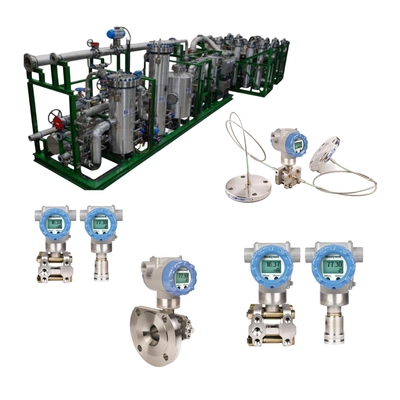
We can supply hydrogen flow measurement solutions from manufacturers such as Endress+Hauser, KROHNE, Rosemount and other industrial instrumentation brands, together with pressure and temperature transmitters.
If you are selecting a flow meter for hydrogen gas, provide the flow range, pressure, temperature and pipe size for a configuration review.


 Il tuo messaggio deve contenere da 20 a 3000 caratteri!